Grief often leaves people asking questions that feel
frightening, confusing, and deeply personal:
• Will this pain ever ease?
• Who am I now?
• How do I live without them?
• Is it wrong to even think about moving forward?
These are tender, honest questions — and they are far
more common than many people realise.
Grief literacy training helps individuals,
teams, and organisations understand that these questions are a natural part of
loss, not a sign of weakness or failure.
One of the biggest fears grieving people carry is this:
“If I move forward, does it mean I am leaving my loved one behind?”
The answer is no.
Moving forward is not the same as moving on. And you do not have to stop loving someone in order to start living again.
Why Grief Needs to Be Acknowledged Before Anything Else
Before anyone can begin to rebuild, their pain must be
recognised.
In our fast-paced world, people often hear:
• “Be strong.”
• “You need to move on.”
• “At least they are no longer suffering.”
Even well-meaning comments can leave people feeling
unseen or misunderstood.
Grief literacy training teaches people how to
recognise these unhelpful responses and replace them with presence, listening,
and emotionally informed language.
Rather than trying to fix grief, training
focuses on building the capacity to witness it.
This approach is especially important in
workplaces, schools, and community settings where grief is often present but
rarely named.
Moving Forward Does Not Mean Forgetting
Many people fear that healing equals betrayal.
They may worry:
• “If I laugh again, does that mean I didn’t love them enough?”
• “If I build a new life, am I replacing them?”
Grief education helps people understand that
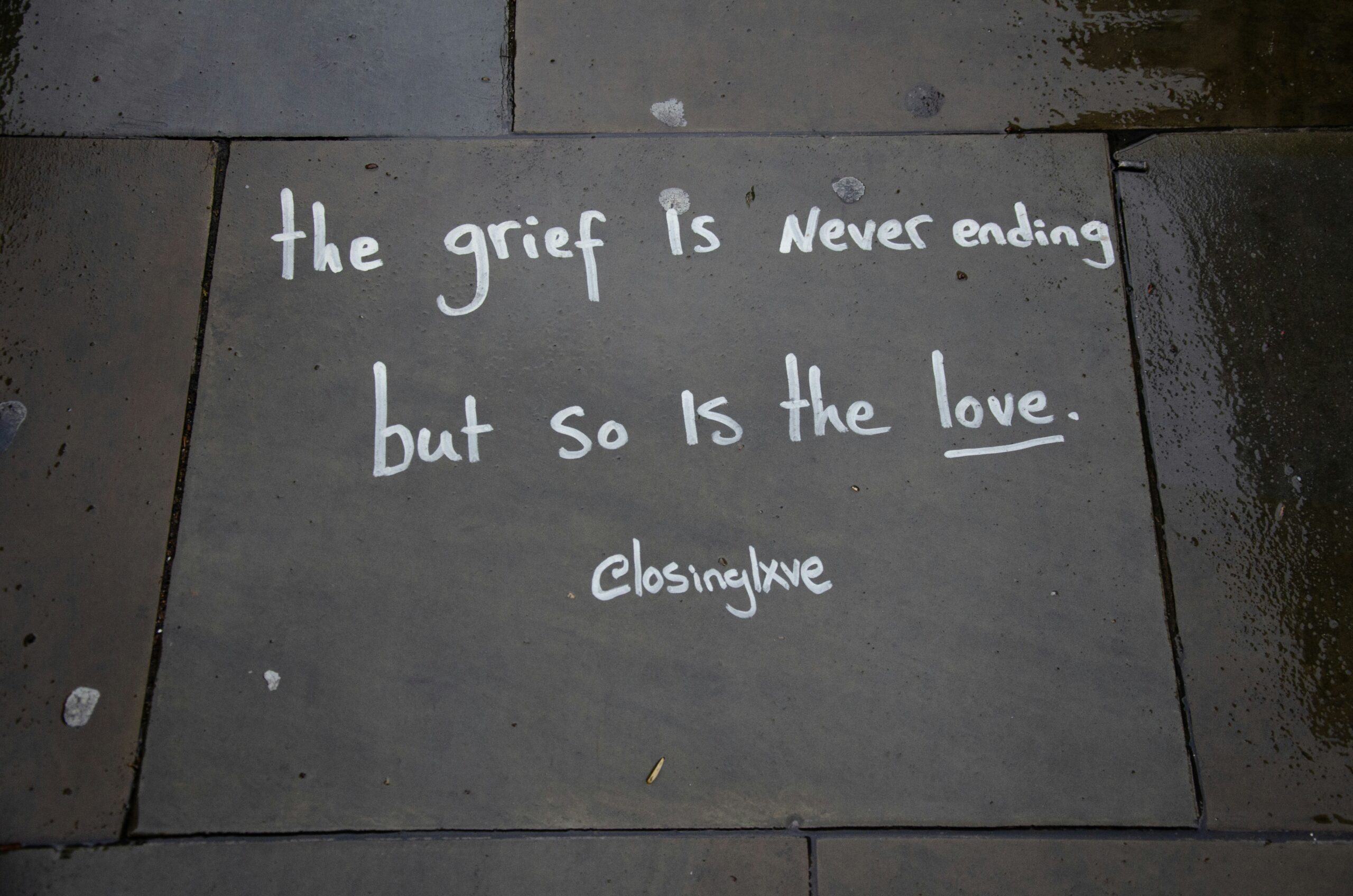
love does not disappear — the relationship changes form.
What was once a physical presence becomes an internal bond.
You carry them differently.
Training introduces this concept in a way
that normalises continued connection, helping people release guilt around
living again.
The goal is not to let go of love.
It is to carry it in a way that no longer overwhelms or crushes you.
Rebuilding Identity After Loss
Loss changes people — sometimes profoundly.
Individuals may feel:
• Lost without a familiar role (spouse, parent, partner, caregiver, colleague)
• Unsure who they are now
• Afraid of a future they did not choose
Grief literacy training helps people
recognise identity loss as a common and expected part of grieving.
Through education and reflection, participants learn to explore:
• What parts of themselves remain strong
• What values still guide them
• What qualities helped them survive
• What may still be possible — even if it looks different than before
This learning-based approach supports
meaning-making without forcing “positive thinking.”
Grief may reshape a life, but it does not erase worth or
the capacity for meaning.
Understanding Meaning — Without Forcing It
Finding meaning does not mean believing a loss happened
“for a reason.”
It does not mean pretending something good came from something devastating.
Grief literacy training reframes meaning as
something personal, slow, and self-directed.
Meaning may show up as:
• Living in a way that honours a loved one.
• Growing in compassion for others.
• Creating new rituals or traditions.
• Supporting someone else who is grieving.
• Re-evaluating what truly matters.
Training helps people understand that meaning
cannot be rushed or imposed — it emerges when emotional safety and
understanding are present.
Working With Guilt and “What Ifs”
Many grieving people carry heavy guilt:
• “If only I had done more.”
• “I should have seen it coming.”
• “I didn’t say goodbye properly.”
These thoughts can keep people feeling stuck.
Grief education helps individuals recognise
guilt as a common grief response rather than a factual truth.
Through structured reflection, guided discussion, and practical tools, people
learn how to soften self-blame and introduce compassion.
This shift often creates space for emotional
movement and renewed engagement with life.
Allowing Life to Re-Enter
At some point — and this timing differs for everyone —
small openings may appear:
A moment of laughter, a spark of interest, a desire to reconnect.
These moments can feel confusing or even frightening.
Grief literacy training helps people
understand that joy and grief can coexist.
Living again does not erase love.
And a loved one’s memory does not depend on ongoing suffering.
Training normalises this dual experience,
reducing guilt around moments of lightness.
Grief Does Not Disappear — It Changes
Grief has no expiry date.
There may still be:
• Difficult anniversaries
• Unexpected triggers
• Sudden waves of sadness
Grief education prepares people for these
moments, helping them understand that resurgence does not mean regression.
Over time, with understanding and support:
• The waves become less overwhelming
• Memories become more accessible than pain
• Love becomes something that can be held without breaking
You do not “get over” grief.
You learn how to live alongside it.
Why Grief Literacy Training Matters
Grief is not only a personal experience — it is a
collective one.
Grief literacy training equips individuals,
leaders, and organisations with the skills to respond to loss with empathy,
clarity, and confidence.
It does not remove grief.
It does not rush healing.
It does not demand positivity.
It builds emotionally informed environments
where people are supported as they move from surviving… to slowly living again.
If you are navigating loss — personally or professionally
— and wondering whether life can feel meaningful again, know this:
It can.
Not in the same way.
Not on the same timeline.
But in a way that honours both sorrow and strength.
And with the right training and understanding, no one has to carry grief alone.